Here is a question I get from Nigerian business owners more often than almost any other:
"My developer said I need hosting. What is that? And how do I know which one to get?"
It's one of the most important decisions you will make about your website — and one of the most misunderstood. The wrong hosting choice is one of the most common hidden reasons why Nigerian business websites load slowly, go down unexpectedly, fall off Google rankings, or get hacked. The right hosting choice is invisible — your site just works, loads fast, stays secure, and keeps bringing in customers.
This guide explains what hosting actually is, the different types available, how hosting affects your Google ranking, what to look for specifically in the Nigerian market, and which providers are worth your money in 2026.
No jargon. No unnecessary technical complexity. Just the information you need to make a smart decision.
What Is Website Hosting, Exactly?
Think of it this way.
Your website is a collection of files — design files, text, images, videos, code. For anyone in the world to be able to open your website in their browser, those files need to live somewhere that is connected to the internet 24 hours a day, 7 days a week.
That somewhere is called a server — a powerful computer that is always switched on, always connected to the internet, and built specifically to send your website's files to anyone who types your address into their browser.
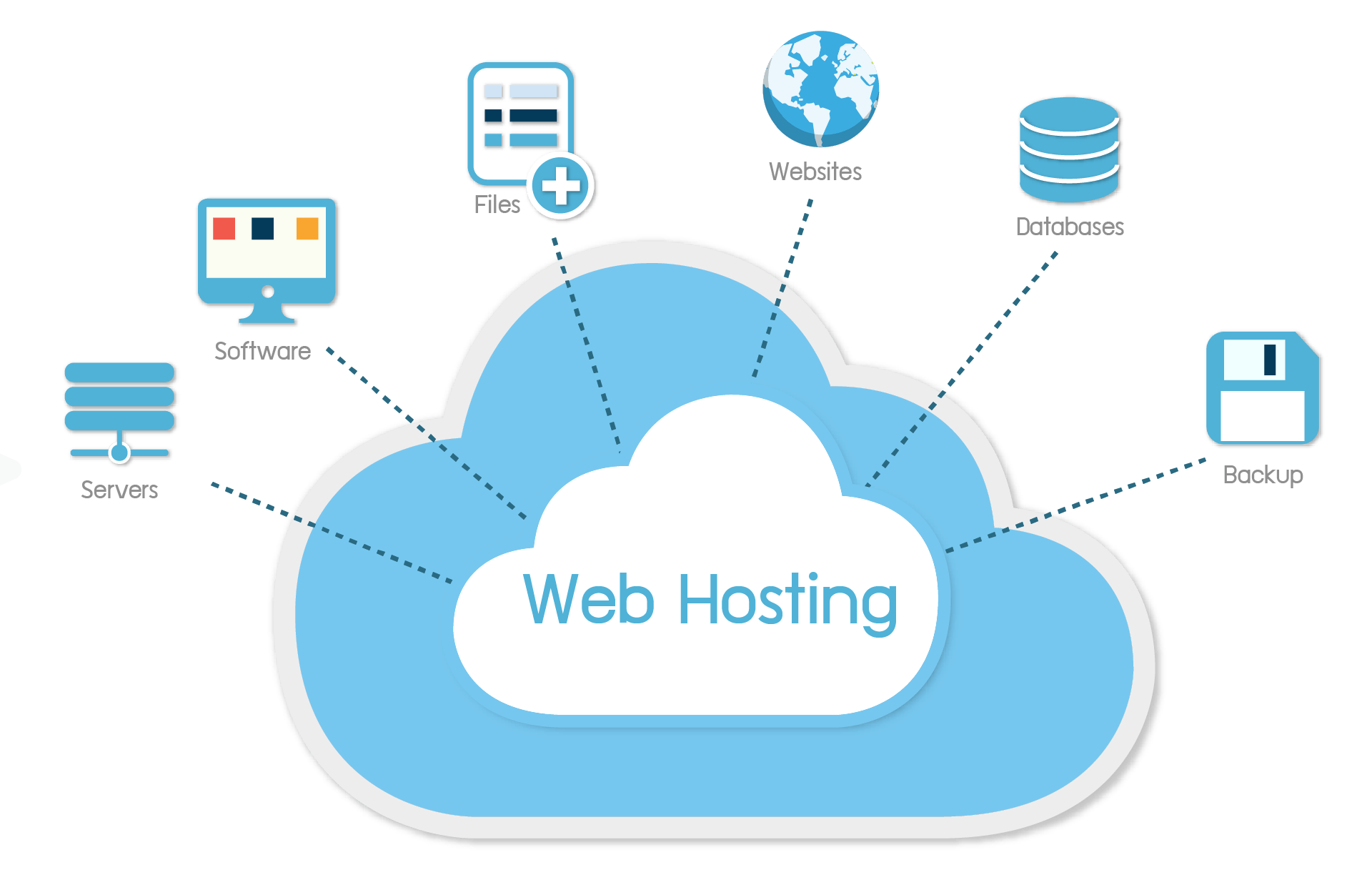
Web hosting is the service of renting space on one of those servers for your website's files.
When someone in Abuja types your business name into Google and clicks your website, here is what happens in under a second:
- Their browser sends a request to the server where your website is hosted
- The server finds your website files and sends them back
- Their browser assembles those files into the page they see on their screen
That entire process takes between 0.5 and 5 seconds depending on the quality of your hosting — and that difference is the difference between a customer who stays and one who clicks away.
Your domain name (yourname.com.ng) is your address. Your hosting is the building that address points to. You need both, and they are separate products — though many providers sell them together.
Why Hosting Matters More Than Most Nigerian Business Owners Realise
Here is what most Nigerian business owners think: hosting is a technical detail that their developer handles, and as long as the website is live, it doesn't matter much which one they use.
Here is the reality: your hosting directly affects four things that matter enormously to your business.
1. How Fast Your Website Loads
Website speed is one of the clearest competitive advantages available to a Nigerian business online — and hosting is its single biggest determinant.
In 2026, hosting plans directly impact your Google rankings, your Core Web Vitals scores, and your visitor experience. A slow server response time makes it very difficult to achieve the fast loading scores Google rewards with higher rankings.
In Nigeria specifically, where many customers browse on mobile data connections that can be inconsistent, the speed at which your hosting server responds makes an enormous practical difference. A website that loads in 1.5 seconds on a shared hosting plan with a server in London feels noticeably slower to a user in Lagos than a website on quality hosting with a server closer to West Africa. That difference in perceived speed affects whether customers stay or leave — and whether Google ranks you or your competitor first.
2. How Often Your Website Goes Down
Every minute your website is unavailable is a minute a potential customer gets an error message instead of your business. This is called downtime, and it is measured by your hosting provider's uptime guarantee — expressed as a percentage.
A reliable hosting provider should guarantee at least 99.9% uptime — considered the industry standard — which translates to less than 0.1% downtime in any given month.
In 2026, you should not accept anything below 99.9% uptime from a hosting provider. The best providers guarantee 99.99% uptime, which translates to less than 53 minutes of downtime per year.
For Nigerian businesses, this is particularly important because cheap or poorly managed hosting — common in the lower end of the Nigerian market — can experience frequent outages that are essentially invisible to the business owner but very visible to potential customers.
3. How Secure Your Website Is
A poorly configured hosting environment is one of the primary ways Nigerian business websites get hacked — injected with spam, defaced, or used to distribute malware. This is not a remote possibility. It happens constantly, particularly to websites on cheap shared hosting where security patches are not applied promptly.
A good hosting provider includes SSL certificates, regular backups, DDoS protection, firewalls, and active security monitoring as part of their service. A bad one includes almost none of this — and charges extra for the basics when something goes wrong.
The security of your hosting also directly affects whether Nigerian customers trust your website. As we discussed in the guide on how to make Nigerian customers trust your business website, an SSL certificate — the padlock in the browser that shows your site uses HTTPS — is one of the most visible trust signals on any Nigerian business website. Good hosting makes this automatic. Bad hosting leaves it as an afterthought.
4. How Well Your Website Ranks on Google
Google's algorithm in 2026 uses page speed and Core Web Vitals as direct ranking factors. A slow website — caused by poor hosting — ranks lower than a fast website with equivalent content. A slow server response time, also called high Time to First Byte (TTFB), makes it very difficult to achieve a good Largest Contentful Paint score, which directly hurts your rankings in competitive search results.
If you have been doing everything right with your SEO — publishing good content, building backlinks, optimising your Google Business Profile — but your website is slow because of poor hosting, you are leaving ranking potential on the table. Your hosting is the foundation that all your other SEO work sits on. Get it wrong and the rest underperforms.
Read more about how to get your business to the top of Google in Nigeria — and understand why hosting is listed as one of the first technical factors to fix.
The 4 Types of Website Hosting Explained
There are four main types of hosting. Each serves a different type of website and business stage. Here is what each one means and who should use it.
Type 1: Shared Hosting
What it is: Your website shares a single physical server with dozens — sometimes hundreds — of other websites. You all share the same CPU power, RAM, storage, and bandwidth. It is the cheapest option because the cost of the server is divided among all its users.
The analogy: Shared hosting is like renting a room in a shared house. The kitchen, bathroom, and living room are shared with everyone else. When your housemates are all doing things at once, things slow down for everyone.
What it costs in Nigeria: Starter plans for shared hosting in Nigeria start from as low as ₦992 per month, up to around ₦3,500–₦6,000 per month for more capable plans from established providers.
The honest pros:
- Cheapest entry point — ideal for new websites with low traffic
- No technical management required — the hosting company handles server maintenance
- Sufficient for most basic business websites receiving under 10,000 monthly visitors
The honest cons:
- On shared hosting, a single "noisy neighbour" can consume excessive resources and drag everyone else's site down — meaning your website speed and reliability is partially dependent on the behaviour of strangers sharing your server.
- Security is more vulnerable — if another site on the server gets hacked, it can affect your site too
- Performance degrades during traffic spikes — if your site or a neighbour's site suddenly gets a surge of visitors, everyone slows down
- Shared hosting usually means sharing an IP address with dozens of other websites — if one of those sites engages in spam or gets blacklisted, your email deliverability and SEO can suffer.
Right for: New business websites, blogs, brochure sites, churches, schools, and any website receiving fewer than 10,000–20,000 monthly visitors. For most Nigerian SMEs starting out, quality shared hosting is the appropriate and cost-effective choice.
Type 2: VPS Hosting (Virtual Private Server)
What it is: Your website gets its own dedicated portion of a physical server — guaranteed CPU, RAM, and storage that no one else can take. Multiple websites still share the same physical hardware, but they are completely isolated from each other using virtualisation technology.
The analogy: VPS hosting is like having your own self-contained flat in an apartment building. You share the building with others, but your space is entirely yours — what happens in their flats doesn't affect yours.
What it costs in Nigeria: VPS hosting typically ranges from ₦6,000 to ₦25,000+ per month, depending on the resources (CPU cores, RAM, storage) allocated to your virtual server.
The honest pros:
- Guaranteed resources — no noisy neighbour problem
- Significantly faster and more stable than shared hosting under load
- Full control over your server environment — install specific software, configure settings exactly as needed
- Better security isolation — other sites on the same hardware cannot affect yours
- Scalable — you can increase resources as your traffic grows without moving providers
The honest cons:
- Requires more technical knowledge to manage, or a managed VPS plan where the provider handles server administration
- Higher cost than shared hosting
- Overkill for most small Nigerian business websites that are not yet receiving significant traffic
Right for: Growing businesses with increasing traffic (20,000+ monthly visitors), eCommerce stores handling regular transactions, web developers managing multiple client sites, businesses where website downtime or slowness has real revenue consequences.
Type 3: Cloud Hosting
What it is: Your website runs across a network of multiple interconnected servers, not just one. If one server has a problem, another takes over automatically. Resources scale up and down dynamically based on demand.
The analogy: Cloud hosting is like having a team of drivers available rather than relying on a single car. If one breaks down, another seamlessly takes over. And if you suddenly need to transport many more people, more vehicles appear automatically.
What it costs: Cloud hosting pricing varies significantly — from around ₦8,000 to ₦50,000+ per month depending on configuration and traffic volume.
The honest pros:
- Extremely high reliability — no single point of failure
- Handles traffic spikes automatically — if a campaign drives 10x your normal visitors overnight, the hosting scales to meet it
- Cloud hosting has become the dominant choice for growing businesses in 2026, distributing workload across a network of virtual servers for superior performance and resilience.
- Pay-as-you-scale models available — you pay for resources actually used
The honest cons:
- More complex to set up and manage than shared or basic VPS
- Cost can become unpredictable if traffic spikes unexpectedly on consumption-based plans
- Generally requires technical expertise or a managed service
Right for: High-traffic websites, eCommerce stores expecting significant growth or seasonal spikes, SaaS applications, and any Nigerian business for whom website downtime has serious financial consequences.
Type 4: Dedicated Server Hosting
What it is: You rent an entire physical server — just for your website. All resources are exclusively yours. Maximum performance, maximum security, maximum cost.
The analogy: Dedicated hosting is like owning the entire building rather than renting space in it.
What it costs: Dedicated servers in Nigeria typically start from ₦50,000–₦200,000+ per month.
Right for: Very high-traffic websites, large eCommerce platforms with complex security and compliance requirements, and enterprise-level Nigerian businesses. The overwhelming majority of Nigerian SMEs and mid-sized businesses will never need dedicated hosting.
A Special Mention: Managed WordPress Hosting
If your website runs on WordPress — which is the case for the majority of Nigerian business websites — managed WordPress hosting deserves specific mention.
Managed WordPress hosting is a specialised type of hosting where the server is configured and optimised specifically for WordPress performance. The hosting provider handles WordPress-specific tasks: automatic WordPress core updates, daily backups, WordPress security monitoring, caching optimised for WordPress, and performance tuning specific to the WordPress architecture.
The best managed WordPress hosts use LiteSpeed Web Servers and NVMe SSD storage, which are up to 5x faster than the traditional Apache/HDD setups used by older hosting providers.
For Nigerian businesses running a WordPress website, managed WordPress hosting is often the best balance of performance, ease of management, and cost. You pay slightly more than basic shared hosting but get significantly better performance without needing to manage a VPS yourself.
What to Look For When Choosing Hosting in Nigeria
Beyond the type of hosting, here are the specific factors that matter most for Nigerian businesses:
Uptime Guarantee
Do not accept any hosting provider that does not explicitly guarantee 99.9% uptime or higher. This should be in writing in their service terms. Many cheap Nigerian hosting providers do not publish uptime guarantees — which tells you something important about their confidence in their own service.
Server Location
The physical location of the server your website runs on affects how quickly it responds to visitors. Prioritise providers with servers in Lagos or nearby regions to achieve the lowest latency and fastest speeds for Nigerian users.
However, server location is not the only factor. A well-configured international server with a Content Delivery Network (CDN) can perform as well or better for Nigerian users than a poorly configured local server. The key question is: what is the actual measured load time for a user in Lagos?
SSL Certificate — Free and Automatic
Every legitimate hosting provider in 2026 should include a free SSL certificate (via Let's Encrypt) with every plan. This is what gives your website the HTTPS padlock that Nigerian customers look for as a trust signal. If a provider wants to charge extra for SSL, look elsewhere.
Naira Payment Options
This is a practical Nigeria-specific consideration. Many international hosting providers require dollar card payments — a significant friction point for Nigerian business owners without foreign currency cards. Small businesses in Nigeria should choose web hosting with local support and local payment methods, like bank transfers, to avoid payment friction. Several excellent Nigerian hosting providers accept bank transfers, Paystack, and other local payment methods.
Backups
Your hosting provider should back up your website files and database automatically — daily at minimum. If your site gets hacked, breaks during an update, or suffers a technical problem, backups are what allow your developer to restore everything. Ask specifically: how often are backups made? How long are they kept? Can you restore a backup yourself, or do you need to contact support?
Customer Support — and How They Handle It
Test any hosting provider's support before you commit. Send a pre-sale query and measure how long they take to respond and how useful their answer is. Nigerian business owners have specific needs — local payment methods, .ng domain support, awareness of Nigerian web development practices — that many international support teams handle poorly.
Renewal Pricing
This is the most common hosting trap in Nigeria. A provider advertises hosting at ₦2,000 per month — but that is the introductory price for the first year. When renewal comes around, the actual price may be two or three times higher. Always ask for and read the renewal pricing before committing, not just the promotional rate.
Hosting Options Worth Considering for Nigerian Businesses in 2026
Based on current market performance, reputation, and Nigerian-specific suitability, here are the providers consistently recommended for different Nigerian business needs:
For Small Businesses and Startups — Nigerian Local Hosts
QServers has been operating in Nigeria since 2004 — one of the longest-running local hosts in the market. QServers, a veteran since 2004, offers robust hosting with local servers in Lagos, ensuring low latency and 99.9% uptime, paired with excellent customer support. They accept Naira payment and understand the Nigerian market specifically.
WhoGoHost (now part of HostAfrica) is one of the most widely recognised names in Nigerian hosting, remaining one of the most recognised names among the top web hosting companies in Nigeria with strong local domain support including .com.ng registration.
Truehost Nigeria offers competitive entry-level plans with LiteSpeed servers — the faster server technology — at accessible price points. Truehost, based in Lagos, offers affordable plans with LiteSpeed servers and free one-month hosting with domain purchases, perfect for cost-conscious users.
For Businesses Prioritising Speed and Performance — International Hosts
Hostinger has become a widely recommended option for Nigerian businesses wanting international-grade performance without complex dollar payment friction. Hostinger uses LiteSpeed Web Servers and NVMe SSD storage — up to 5x faster than traditional Apache/HDD setups used by older hosts — and is considered strong for serious bloggers, eCommerce businesses, and brands that want international speed without the dollar card headache.
SiteGround is particularly well-regarded for managed WordPress hosting, excelling in WordPress hosting with fast speeds, free migrations, and daily backups, appealing to tech-savvy Nigerian users.
HostAfrica — formed after the acquisition of WhoGoHost and GO54 — has emerged as one of Africa's largest hosting providers. HostAfrica dominates as Africa's largest hosting provider, with South African servers ensuring fast speeds for Nigerian users and including free .com.ng domains.
A Note on "Cheapest Available" Options
There is a bottom end of the Nigerian hosting market — providers offering hosting for ₦500 to ₦1,000 per month — that consistently produces poor results: frequent downtime, slow loading speeds, inadequate security, and unresponsive support. The money saved on hosting at this level is almost always lost in the cost of website problems, customer trust damage, and the developer time required to fix issues.
Quality hosting is one of the worst places to cut costs on your website. A ₦3,000–₦6,000 per month shared hosting plan from a reputable provider will serve most Nigerian businesses well. The marginal saving from going cheaper is not worth the risk.
How Hosting Affects Your Google Ranking — The Direct Link
This point deserves its own section because it is widely underestimated by Nigerian business owners.
If your website doesn't show up on Google — or ranks lower than competitors whose content isn't as good as yours — poor hosting could be a significant contributing factor.
Google measures three Core Web Vitals that directly influence rankings:
LCP (Largest Contentful Paint) — how long it takes for the main content of your page to appear. Slow hosting with high server response times fails this directly.
INP (Interaction to Next Paint) — how quickly your page responds to user interactions. A slow server contributes to poor scores.
CLS (Cumulative Layout Shift) — how stable your page layout is during loading. Poor hosting can cause elements to load out of order, contributing to layout shifts.
Shared hosting works well for websites receiving up to 10,000–20,000 monthly visitors. Beyond that threshold, upgrading to VPS or Cloud Hosting provides the reliability and performance needed for better Core Web Vitals scores and stronger Google rankings.
If you are investing in SEO — content creation, backlink building, Google Business Profile management — and your hosting is undermining your page speed scores, you are fighting with one hand tied behind your back. Fixing your hosting can sometimes produce more immediate ranking improvement than months of additional content work.
Read our complete guide: Why Your Lagos Business Doesn't Show Up on Google (and How to Fix It)
The One Question Most Nigerian Business Owners Never Ask Their Developer
"Who owns the hosting account?"
This is one of the most important practical questions in the Nigerian web development market — and most clients never ask it.
When a developer sets up hosting on your behalf, they sometimes create the hosting account in their own name, using their own email and payment method. Your website lives in their account, not yours.
What happens when:
- You have a dispute with the developer?
- The developer goes quiet, moves abroad, or is unavailable?
- You want to switch developers?
- You need urgent access to your hosting control panel?
If the hosting account belongs to your developer, your website is effectively held hostage. This scenario plays out regularly in the Nigerian web development market and causes serious problems for business owners.
The rule: Your domain and your hosting account should always be in your name, registered with your email address, and paid for by you directly. Your developer can have access to manage your hosting — but the ownership must be yours.
If you are currently in a situation where you are not sure who owns your hosting — contact your developer and ask for your hosting login details and account information. If they are unable or unwilling to provide them, that is a serious red flag that needs to be resolved urgently.
Choosing the Right Hosting: A Quick Decision Framework
Use this to decide what type of hosting your Nigerian business needs right now:
| Your Situation | Recommended Hosting Type |
|---|---|
| New website, under 10,000 monthly visitors | Quality shared hosting (₦3,000–₦6,000/month) |
| Growing business, 10,000–50,000 monthly visitors | Managed WordPress or VPS hosting |
| eCommerce store processing regular transactions | Managed WordPress or VPS — prioritise uptime and security |
| High-traffic platform or marketplace | Cloud hosting or managed VPS |
| Large enterprise or very high-traffic site | Dedicated server or premium cloud |
For most Nigerian SMEs in 2026: Quality shared hosting or managed WordPress hosting from a reputable provider is the appropriate starting point. Invest in quality rather than in the cheapest option available — the difference is typically ₦2,000–₦3,000 per month, which is money well spent on a business asset that works 24 hours a day.
The Questions to Ask Before You Buy Any Hosting Plan
Whether you're choosing hosting yourself or briefing a developer to set it up on your behalf, ask these questions before committing:
- What is your uptime guarantee, and is it in writing? (Minimum: 99.9%)
- Where are your servers located? (Lagos or West Africa is ideal; global CDN can compensate for distance)
- Is SSL included free with the plan? (Yes should be the only acceptable answer in 2026)
- How often are backups made, and how do I restore one?
- What are your renewal prices, not just the introductory rate?
- Can I pay in Naira? What payment methods do you accept?
- What kind of support do you offer — and how quickly do you respond?
- Do I own the hosting account, or will it be in my developer's name?
A reputable hosting provider will have clear, confident answers to every one of these. Vague or evasive answers to any of them — particularly on uptime, backups, and account ownership — should make you look elsewhere.
The Bottom Line
Website hosting is not a glamorous topic. It is invisible infrastructure — and like most infrastructure, you only really notice it when it fails.
The businesses that get hosting right are the ones whose websites load fast, stay secure, rank well on Google, and keep working while the business owner focuses on running their business. The businesses that get it wrong spend time and money dealing with a slow site, a hacked website, a missing backup, or a developer dispute that has locked them out of their own online home.
The investment difference between poor hosting and good hosting for a Nigerian SME is typically ₦2,000–₦4,000 per month. On an asset that works 24 hours a day representing your business to every potential customer who looks you up online — that is not a meaningful cost. It is the most basic cost of doing digital business properly.
Choose a reputable provider. Own your account. Pay for quality. Then stop thinking about hosting and focus on growing your business.
Need Help Setting Up Hosting the Right Way?
Setting up hosting correctly — owned by you, configured for performance, secured from day one, and connected to a fast and beautiful website — is part of every web project we deliver at Peterman Web Design.
Whether you're starting from scratch or want to fix a hosting situation that isn't working, get in touch here and we'll advise you on exactly what you need.
Curious about what a properly hosted, well-built Nigerian business website costs? Read: How Much Does a Website Cost in Nigeria in 2026?
Written by Peterman — Web Developer in Lagos, Nigeria. Building fast, secure, SEO-optimised websites for Nigerian businesses. Questions about hosting or web development? Drop them in the comments or send a WhatsApp.
Tags: website hosting Nigeria, best web hosting Nigeria 2026, shared hosting VPS Nigeria, Nigerian hosting providers, web hosting for Nigerian businesses, hosting and Google ranking Nigeria, WhoGoHost QServers Hostinger Nigeria